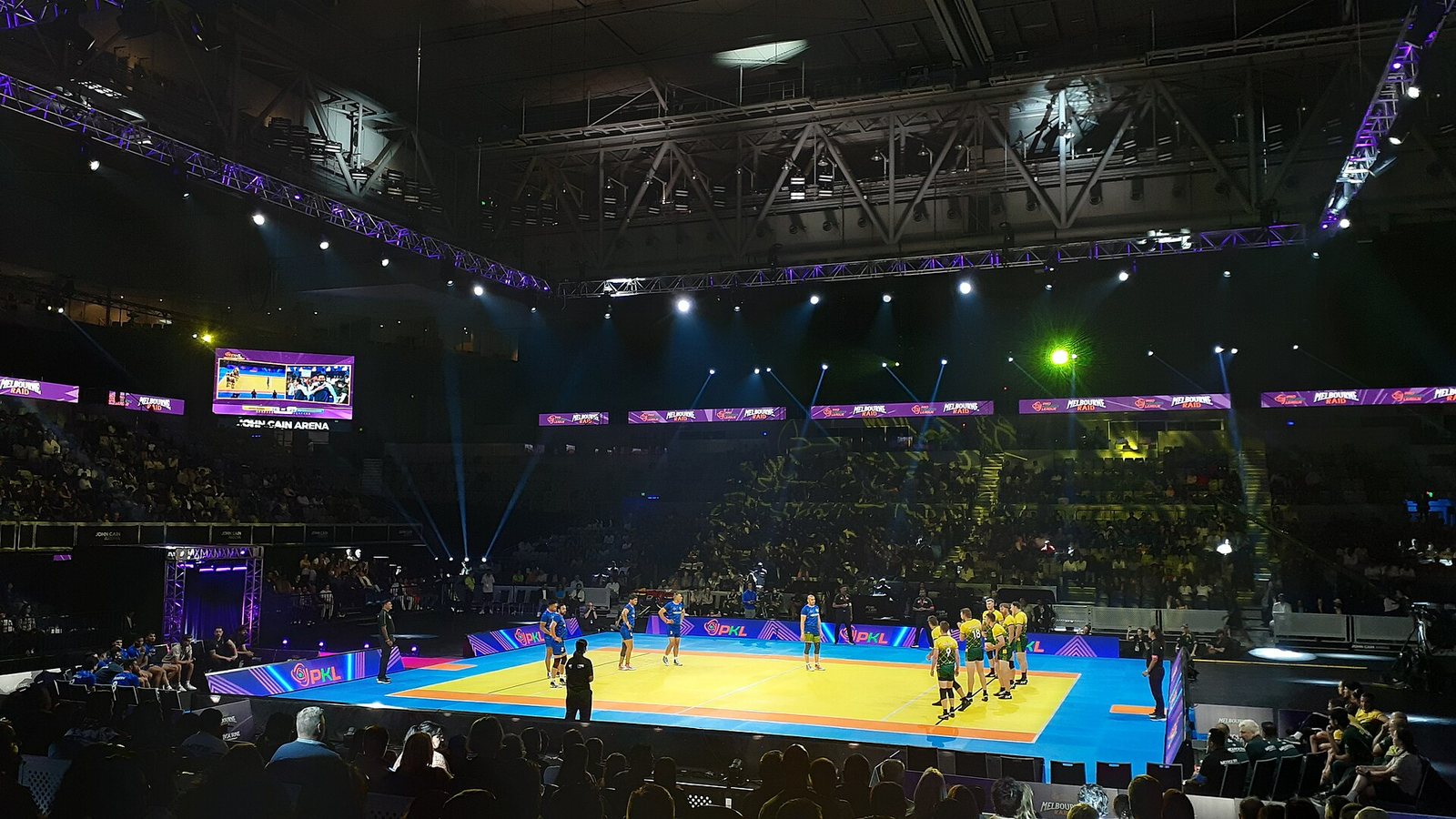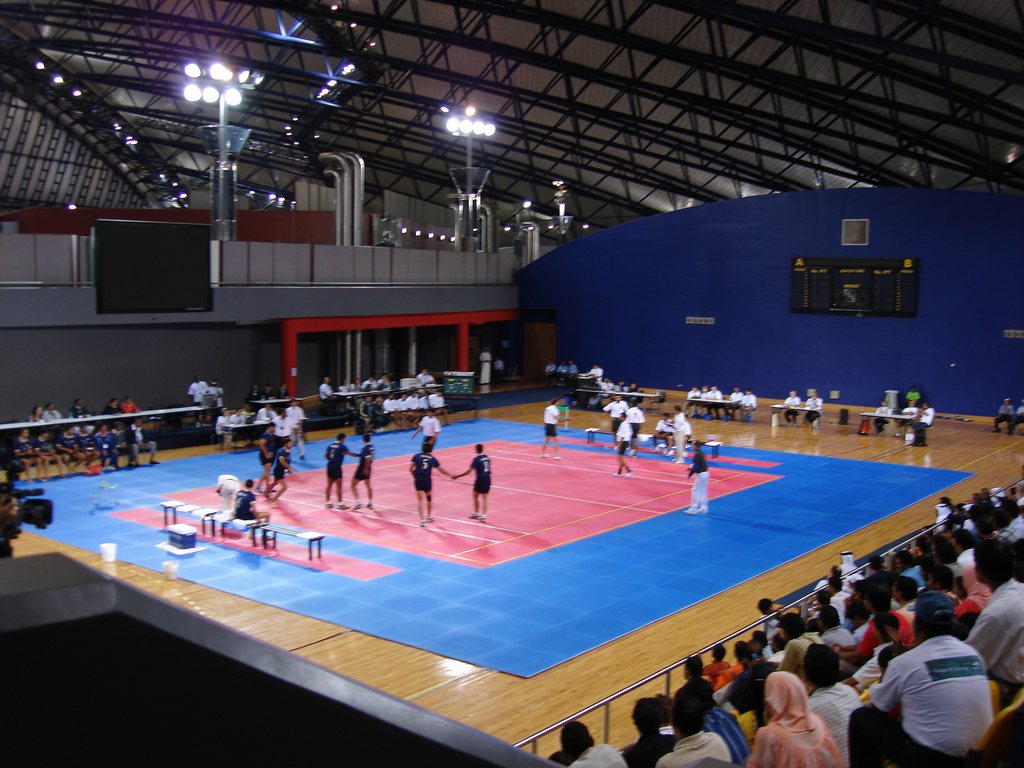
Kabaddi rules look like chaos from the outside: one player runs into the opposition half, seven men hurl themselves at him to catch him, and all the while he keeps chanting ‘kabaddi, kabaddi’. There is a fresh reason to get to grips with the kabaddi game rules: on 26 September at the Asian Games in Japan’s Aichi Prefecture the India men’s team beat Iran 40-34 to defend their title, and the women’s team also won the final against Iran, 37-34. To a spectator seeing kabaddi for the first time, such a kabaddi match looks like a mix of tag, wrestling and rugby on a mat. Here is what is actually going on.
Kabaddi: what kind of sport it is
Kabaddi is a team contact game that originated on the Indian subcontinent. Its exact origins are unknown, but it is thought to have been played for several thousand years. The modern kabaddi rules and regulations were written down in 1921 in what is now the Indian state of Maharashtra. The Indian game of kabaddi long ago spread beyond India: in Bangladesh it has been the national sport since 1972, and one of the strongest teams in the world is Iran.
Kabaddi is a game with no ball and no equipment. All you need is a mat, markings and stamina: the attacker has to finish within 30 seconds, and the defenders have to catch their opponent with their bare hands.
How to play kabaddi: the rules and regulations of the game
Two teams of seven on the mat divide the court in half. Attacks alternate: one team sends a single player, the raider, into the opposition half. His task is to touch one of the defenders and get back to his own half. The task of the seven defenders is to stop him getting away. Every touch earns the attack a point, every successful tackle earns the defence a point. A player who is out sits on the bench and waits for his team to ‘revive’ him. Besides the seven on the mat, a squad has between three and five substitutes.
The kabaddi court and its measurements
The mat for senior men’s competitions measures 13 by 10 metres, for women 12 by 8. In the middle is the centre line. On each half there are several important markings:
- The baulk line runs parallel to the centre line. The raider must cross it in the opposition half. The exception is if he has already managed to touch a defender.
- The bonus line runs one metre beyond the baulk line, closer to the back boundary.
- The lobby is the one-metre-wide strips along the long sides of the court.
The kabaddi raid: 30 seconds and ‘kabaddi’ without stopping
A raid is given 30 seconds. Throughout it the raider repeats the word ‘kabaddi’ on a single breath, showing that he has not taken in air. This chant is called the cant, and it must be started before the raider crosses the centre line. Fall silent in the opposition half and you are out.
The raider earns a point for each defender he manages to touch, but only if he then returns to his own half. The defenders he touched are out. A raid without a single point is called an empty raid.
The bonus
A raider can earn a bonus point even without touching anyone: he must put one foot beyond the bonus line while the other is in the air at that moment, and get home. The bonus counts only if the opposition has at least six defenders on the mat. So a full seven in defence is also a vulnerability.
The do-or-die raid
To stop raiders dragging out time with empty forays, the kabaddi rules include the do-or-die raid. After two empty raids in a row, the third becomes obligatory for a result. If that one also brings no points, the raider is out and the defence is awarded a point.
Defence: the tackle and the super tackle
The defenders stand in a semicircle: the corners on the flanks, the ins next to them, then the covers and the centre. Their aim is to grab the raider and hold him until his time runs out, or to push him off the court. A successful tackle earns the defence a point, and the raider is out.
If three defenders or fewer are left on the mat, under the kabaddi rules a successful tackle becomes a super tackle and is worth two points instead of one. Admittedly, the second point does not revive anyone: only one player comes back from the bench anyway. The reverse situation is the super raid: a raider scores three points or more in a single foray.
Being out, ‘reviving’ and the all out
A player is knocked out by a touch, a tackle or by going outside the court boundaries. Under the kabaddi rules he can only be brought back into the game by points: each point for a touch or a tackle ‘revives’ one teammate, and in order of the queue — whoever went out first comes back first. Bonus points do not bring anyone back.
If all seven are knocked out, an all out follows (in the game’s terminology it is also called a ‘lona’): the opposition gets two extra points, and the affected team returns to the mat at full strength. That is why the all out is the quickest way to pull away in the score: from one successful sequence a team gets points for the touches and a bonus on top.
How long a kabaddi match lasts and how a draw is decided
The kabaddi rules give a men’s match two halves of 20 minutes, for women 15 minutes each, with a five-minute interval between them. In the Pro Kabaddi League a match takes up 40 minutes of playing time.
In the league play-offs, extra time used to be played in the event of a draw, and from season 12 (2025) a tie-break was introduced for all matches. First a series of five raids: each team puts forward five different raiders, there are no outs or ‘revivals’, only points count, and the baulk line also works as the bonus line. If the scores are still level, a ‘golden raid’ is awarded, with the team for it decided by lot. The first golden raid in the league’s history came in season 12 in the match between Dabang Delhi and Puneri Paltan.
Kabaddi at the Asian Games 2026
The finals took place on 26 September at the Tokai Citizen Gymnasium in the city of Tokai. The India national kabaddi team went into the break trailing Iran 17-18, but turned the game around in the second half and won 40-34, without losing a single match in the tournament. The attack was led by Arjun Deshwal and Devank Dalal, while Sumit stood out in defence. For Iran, the captain was Fazel Atrachali, a Pro Kabaddi League star.
For India this is a ninth gold in ten editions of the men’s tournament. Kabaddi has been on the Asian Games programme since 1990, and the only exception was Jakarta 2018, where Iran won. The women’s tournament appeared at the 2010 Games in Guangzhou. In the 2026 final the Indian women led 22-16 after the first half, held on to their advantage — 37-34 — and won a fourth gold. Iran, the 2018 champions, were runners-up again.
The history of kabaddi and the Pro Kabaddi League
Kabaddi’s first appearance on the international stage was a demonstration at the 1936 Olympics in Berlin, but the game never became an Olympic sport. Kabaddi was also a demonstration sport at the 1951 and 1982 Asian Games, until it entered the medal programme. The first men’s world championship was held in 2004 in Mumbai, the first women’s in 2012 in Patna, and India have won every edition.
The game’s main professional stage today is India’s Pro Kabaddi League (PKL). The league’s first season in 2014, by its own estimate, became the second most-watched sports event on television in India. We looked at how its season, auction and play-offs are structured in our piece on the Pro Kabaddi League.
Frequently asked questions about kabaddi rules
What is kabaddi?
A team contact game from the Indian subcontinent: a raider runs into the opposition half, touches the defenders and must return, while the defenders try to catch him.
Kabaddi: how many players are in a team?
Seven on the mat on each side, plus between three and five substitutes.
Kabaddi: how much time does a match last?
For men, two halves of 20 minutes; for women, 15 each, with a five-minute interval between them.
Who won kabaddi at the 2026 Asian Games?
Both India teams. The men beat Iran 40-34, the women also beat Iran, 37-34.
Is kabaddi an Olympic sport?
No. The game was demonstrated at the 1936 Olympics in Berlin, but it is not part of the Olympic programme. Medals are awarded at the Asian Games.