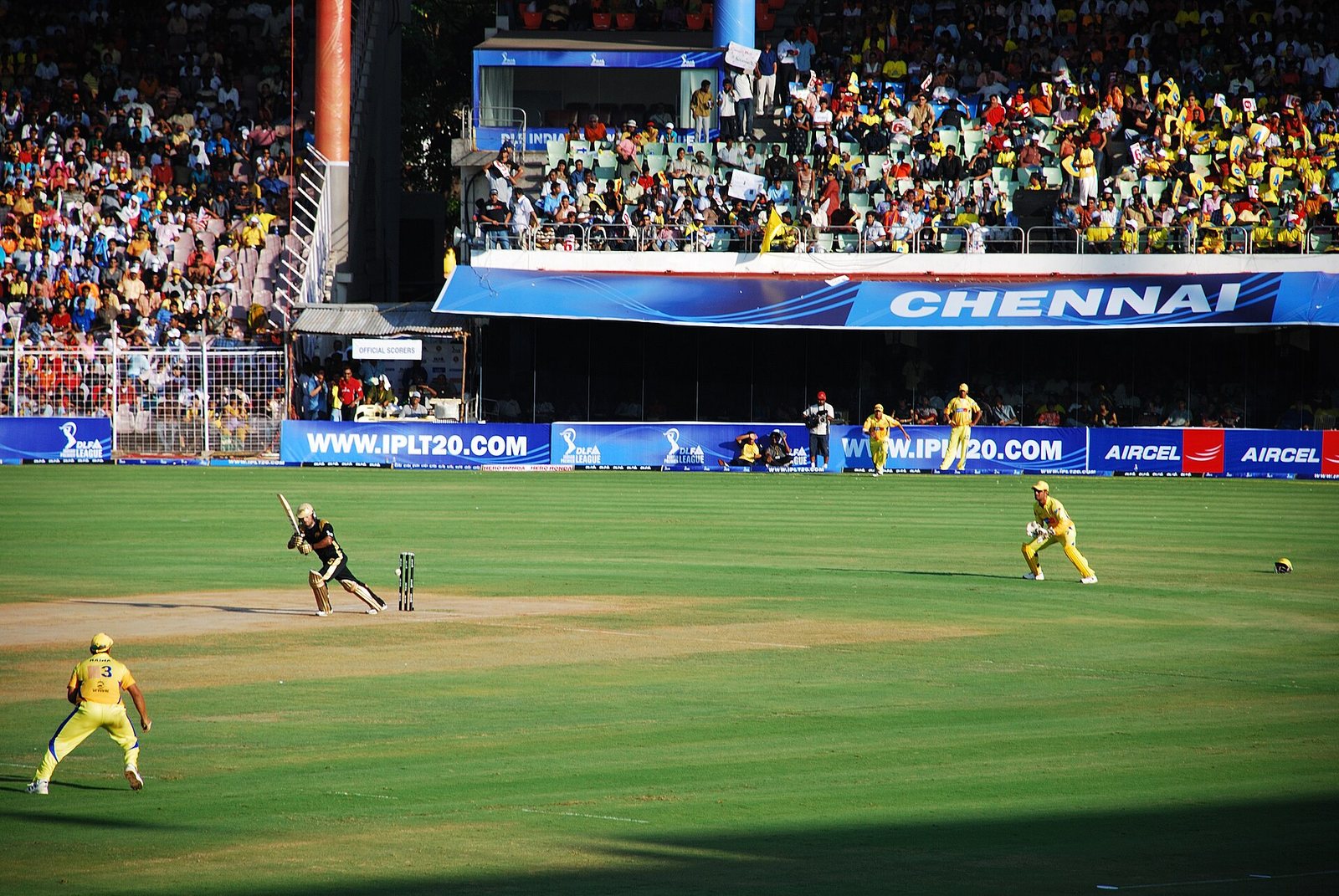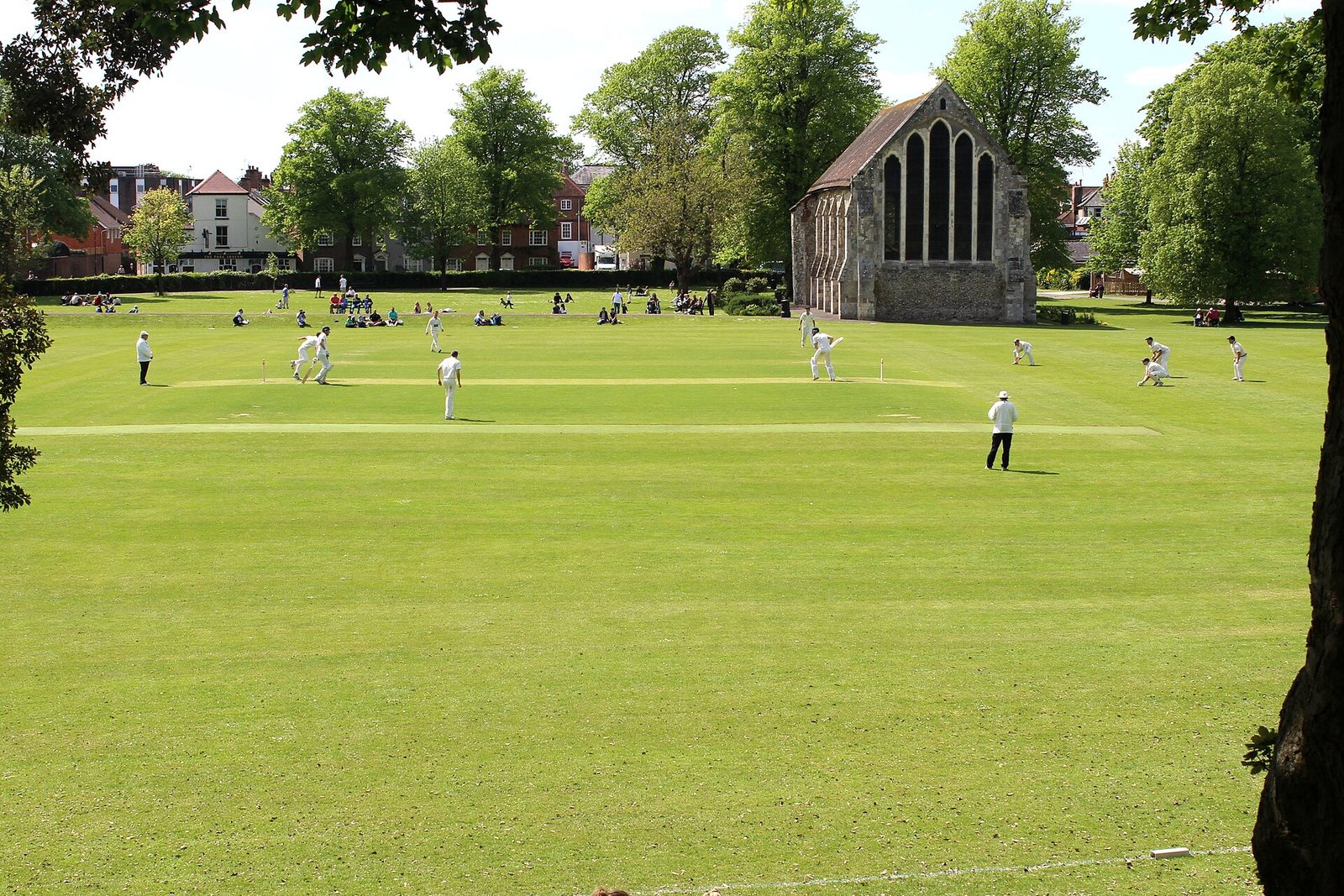
Cricket rules for beginners frighten the newcomer with their vocabulary: innings, over, wicket, LBW. In fact the game is built on a simple pair — bowler against batter — and everything else is a superstructure on top of it. There is a fresh reason to get to grips with it: on 1 October 2026 the fourth edition of the 2017 Code of Laws came into force, in which the Marylebone Cricket Club (MCC) made 73 changes. Below are the cricket rules explained in plain words and in the form in which they are written now.
What is cricket sport: what kind of game it is and where it is popular
Cricket is a team game with a bat and a ball: two teams of eleven take turns batting and bowling, and the team that scores more runs wins. Cricket was born in the south-east of England: the earliest reliable mention of the game comes from a court case in Guildford in 1597 (January 1598 by the modern calendar).
Where is cricket popular today? Above all in India, Pakistan, Bangladesh, Sri Lanka and Afghanistan, and also in Australia, New Zealand, England, South Africa and the West Indies. The game has more than a billion fans, and nine out of ten of them live in South Asia. More than a hundred countries belong to the International Cricket Council (ICC), twelve of them full members who play Test matches. Cricket should not be confused with croquet: there you drive balls through hoops with a mallet, and the only thing the two games share is a similar sound.
Who sets the cricket rules
Cricket has no ‘rules’ in the usual sense — it has Laws, and their guardian is not an international federation but the London club MCC at Lord’s. The earliest known code dates from 1744, and the first MCC code was adopted on 30 May 1788. On top of the Laws, the ICC issues playing conditions for its matches: there, for example, the number of overs in short formats is limited. But the foundation — the field, the wicket, the ways of getting out — is the same for everyone, from a school match to a World Cup final.
The cricket field, the pitch and the cricket wicket
The cricket field is a large circle or oval with no strictly fixed size: the boundary is determined by the umpires before the toss, usually a white line or a rope. Everything most important happens in the centre, on the pitch — a strip 22 yards (20.12 m) long and 10 feet (3.05 m) wide.
The wicket in cricket stands at both ends of the pitch: it is three wooden stumps 71.12 cm high, with two small bails lying on top. The width of the wicket is 22.86 cm. In front of each wicket, at a distance of 1.22 m, the popping crease is marked. As long as the batter stands behind it with bat or foot, he is ‘in his ground’ and safe; once he leaves it, he can be got out.
How many players are in cricket, the cricket innings explained and the over
How many players are in cricket? Each team has 11, one of them the captain. One team bats, the other bowls and fields, then they swap. An innings in cricket is the stretch during which a team bats. A match can be one or two innings per side — by agreement or by the tournament regulations.
Two batters are on the field at the same time, one at each wicket. The innings ends when ten out of eleven have been got out: the last one simply has no one to continue with. Other options are that the captain has declared the innings closed, or the limit of overs has been used up, if one is set.
What is an over in cricket? An over is a series of deliveries by one bowler. Under Law 17 an over consists of six fair deliveries, and the ends of the pitch alternate: the next over is bowled by a different bowler from the opposite end. A wide and a no ball do not count towards the six and bring the opponents a penalty run.
Who is who on the field
- Batter — the one who bats, formerly batsman: in cricket that name is still in use. The one facing the delivery is the striker, his partner at the other wicket is the non-striker.
- Bowler — the one who bowls. The ball must be bowled, not thrown: once the arm has been raised to shoulder level, the elbow may not be straightened (Law 21.2). That is why a delivery looks like a wide swing with a straight arm.
- Wicket-keeper — the equivalent of the catcher in baseball, standing behind the batter’s wicket. He is the only fielder allowed gloves and external leg guards.
- Fielders — the rest of the bowling team. They catch the ball and return it to the wickets.
How to play cricket step by step: runs, fours and sixes
Points in cricket are runs. One run is scored when the two batters have crossed after a hit and each has reached the opposite line. Running is not obligatory: you can defend and stay where you are.
If the ball after a hit rolls over the boundary of the field, there is no need to run. If it touched the ground inside the field and crossed the boundary, that is a ‘four’, 4 runs. If it flew over the boundary in the air after a hit with the bat, that is a ‘six’, 6 runs. Extras are counted separately: the same wides and no balls, as well as runs the batters ran when the ball did not touch the bat (bye) or bounced off the body (leg bye).
How a batter is got out
The main detail in the cricket rules that newcomers miss: the umpire will not give a batter out on his own. Under Law 31 the fielders must appeal — the traditional cry of ‘How’s that?’ covers all ways of getting out. Then the umpire decides.
The main ways of getting out
- Bowled — the delivery has broken the wicket (usually meaning a bail has been dislodged), even if the ball touched the bat or the batter’s body before that.
- Caught — the ball off the bat has been caught by a fielder before touching the ground.
- LBW (leg before wicket) — the ball hit the batter’s body rather than the bat, and without that it would have hit the wicket. There are five conditions: the delivery is fair, the ball pitched not on the leg side of the batter, it did not touch the bat first, the point of impact is on the line between the wickets (or beyond the line of the outer stump if the batter did not even attempt to play a shot), and the trajectory was heading for the stumps. In practice this is the most disputed way of getting out: the umpire has to continue the ball’s trajectory in his mind.
- Run out — the batter has ended up outside his ground (most often he failed to complete a run), and a fielder has broken the wicket at his end with the ball.
- Stumped — the batter has left his ground without attempting to run, and the wicket-keeper has broken the wicket without the help of other fielders.
Rare ways
There is also hit wicket (the batter himself knocks over his own wicket with bat or body), hitting the ball twice, obstructing the field, and timed out: a new batter must be ready to play within three minutes of the previous one’s dismissal, otherwise he is out without facing a single ball.
How does cricket work scoring and who wins
A team’s score is written with a slash: ‘156/5’ means 156 runs with five batters out. Next to it is usually the number of overs played. To understand who is winning in cricket, compare the runs: the team that has scored more wins. If the team batting second wins, they speak of a win ‘by so many wickets’, that is, how many of their batters remained not out. If the team batting first wins, it is ‘by so many runs’.
If the scores are level after all completed innings, a tie is recorded. In a multi-day match there is another outcome — a draw: time has run out and the opponents still have batters not out. That is why a five-day Test can end in a draw at any score. To speed up a result, in a two-innings match over five days a team that leads its opponent by at least 200 runs may enforce the follow-on, making them bat their second innings immediately.
How long a cricket match lasts
The cricket rules are one, but the duration depends on the format. Under the ICC playing conditions:
- Test is scheduled for five days of six hours’ play, and on a normal day a minimum of 90 overs must be bowled.
- ODI (one-day match, 50 overs per team) — two sessions of 3.5 hours with a half-hour interval between innings, seven and a half hours in total including the break.
- T20 (20 overs each) — two sessions of 1 hour 25 minutes and an interval of up to 20 minutes: the match fits into about three hours. A tie in T20 is settled by a Super Over — an extra over for each team.
For detail on the formats and tournaments, see the guide to the Test, ODI, T20 and the Indian Premier League.
How cricket differs from baseball
Both games are built on a duel between bowler and batter, but the differences are greater than they seem. In baseball the batter must run after hitting the ball into the field, while in cricket running is not obligatory. In baseball there is a foul zone beyond the side lines, while in cricket the ball can be hit in any direction, even backwards. The cricket bat is wide and flat, not round, and the ball is usually bowled with a bounce off the ground. There are two more fielders in cricket. Finally, in baseball half an innings ends after three outs, while in cricket an innings lasts until ten batters are out.
What changed in the cricket rules from 1 October 2026
Most of the 73 amendments are clarifications of wording, but a spectator will notice several:
- The last over of the day in a multi-day match is now played to the end, even if a batter is out in it: a new batter will have to come out to the field.
- It is no longer possible to declare or forfeit the last innings of a match without playing — the MCC believes that results were ‘agreed’ that way.
- A delivery above the batter’s head is now a wide under the Laws, not a no ball, as in professional regulations.
- The trick of ‘jumping’ at the boundary is restricted: you may jump from behind the line to catch the ball in the air only once.
- If the ball after a hit rebounds off the non-striker’s wicket and returns to the batter’s wicket, that is no longer bowled.
If you need the cricket rules briefly, for a first watch three things are enough: follow how many runs have been scored and how many batters are out, how many overs are left and who is bowling now. The rest comes with a couple of matches. And if you are looking for a cricket rules simple summary for a first watch, remember that the cricket rules are the same at every level: the cricket match rules govern the field, the wicket, an innings and the over, and the cricket rules explained above are all you need to follow a game.
Frequently asked questions about the cricket rules
What is cricket?
A team game with a bat and a ball from England: eleven against eleven, the teams take turns batting and bowling, and the one that scores more runs wins.
How many players are in a cricket team?
Eleven. Two bat at the same time, and the innings ends when ten batters are out.
How long does a cricket match last?
A Test — up to five days of six hours’ play, an ODI — about seven and a half hours, a T20 — about three hours.
How does cricket work scoring?
The notation ‘156/5’ means 156 runs with five batters out. The one with more runs wins.
How does cricket differ from baseball?
In cricket you do not have to run after a hit, there is no foul zone, the bat is flat, and an innings lasts until ten outs, not three.
Where is cricket popular?
Most of all in South Asia — in India, Pakistan, Bangladesh, Sri Lanka and Afghanistan, and also in Australia, England, New Zealand, South Africa and the West Indies.