The IPL (Indian Premier League) is the world’s leading club cricket league and the easiest way for a newcomer to get into the game: a T20 match fits into a single evening. But cricket has three senior formats, and they differ more than, say, football and futsal. A Test lasts up to five days and can quite easily end in a draw, an ODI is a one-day game of fifty overs, and a T20 is twenty overs per side. Here is how they differ, which tournaments the national teams contest, and how the Indian Premier League 2026 is put together.
Cricket formats explained: Test, ODI and T20
The laws of the game (how batters bat, bowlers bowl and fielders dismiss) are the same across all three formats — we covered them in our piece on the rules of cricket. What differs is the limits, the duration and the tournaments:
| Format | Innings per team | Over limit | How long it lasts | Main international tournament |
|---|---|---|---|---|
| Test | up to two | none | up to five days | World Test Championship |
| ODI | one | 50 | about 7.5 hours | World Cup, Champions Trophy |
| T20 | one | 20 | about three hours | T20 World Cup |
The Test match in cricket: five days and the right to a draw
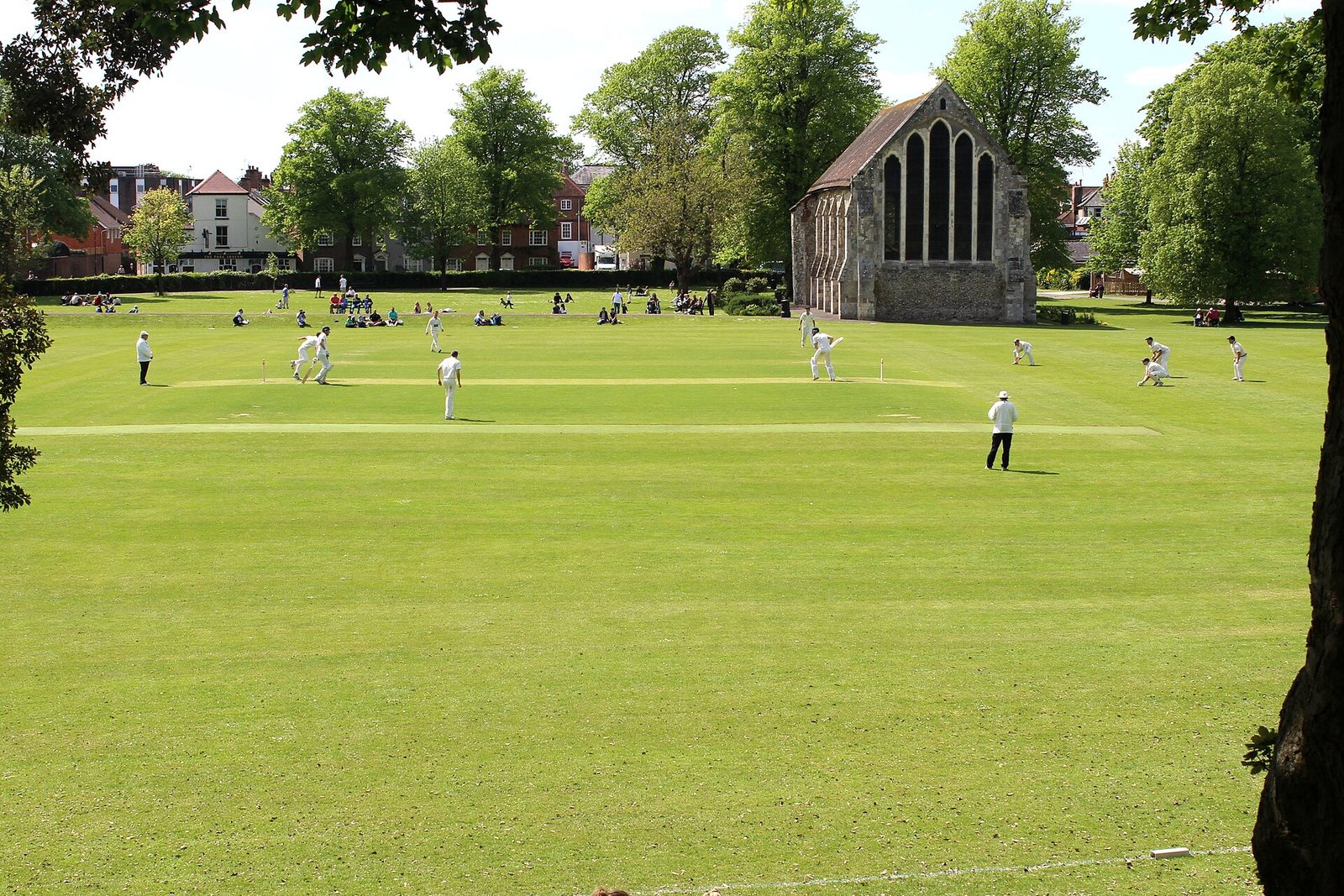
The Test match is the oldest format. Each team bats up to two innings, with no limit on overs. Under the ICC playing conditions in force from October 2026, a match is scheduled for five days of six hours’ play. On a normal day a minimum of 90 overs must be bowled, and on the final day 75 plus the last hour. If one of the teams has not dismissed the opposition the required number of times within five days, a draw is recorded, however many runs are on the board.
The leading national teams contest the World Test Championship: a two-year cycle of series culminating in a final. In the most recent final, in June 2025 at Lord’s, South Africa beat Australia by five wickets. It was South Africa’s first title at a senior men’s ICC tournament since 1998.
ODI — what it is: fifty overs in a day
An ODI is a One Day International. Each team has one innings, no longer than 50 overs, with a 3.5-hour session allotted to each. A bowler may deliver no more than ten overs. The first ten overs are a powerplay: only two fielders may stand outside the 30-yard circle.
The ICC runs two tournaments in the ODI format. The first is the World Cup, which is what people usually mean by the Cricket World Cup. The second is the Champions Trophy: in March 2025 India won it, beating New Zealand in the final in Dubai by four wickets. It was India’s third such trophy.
Cricket World Cup 2027
The next ODI Cricket World Cup 2027 will be held from 2 October to 21 November 2027 in South Africa, Zimbabwe and Namibia: 14 teams, 57 matches, with the final in Johannesburg. The tournament will open with a three-team mini-group in Windhoek, whose winner takes the last place in the main draw. After that twelve teams will play in two groups of six, the top seven will advance to the Super 7 round-robin stage (points are not carried over), and the best four will reach the semi-finals.
The T20 format: twenty overs and one evening
T20 (Twenty20) is the shortest format: one innings of no more than 20 overs per side, with a bowler delivering a maximum of four. The powerplay covers the first six overs. Under the ICC playing conditions a tie in a T20 is settled by a super over — an extra over for each team — and if that too ends level, another is played. Every ball counts here: a team that did not accelerate from the first overs will not have time to catch its opponent.
The most recent T20 Cricket World Cup was held from 7 February to 8 March 2026 in India and Sri Lanka, with 20 teams taking part. In the final on 8 March in Ahmedabad, India scored 255 runs for the loss of five wickets and bowled New Zealand out for 159. The 96-run victory made India the first team with three titles, the first to defend the title and the first to win the tournament at home. Sanju Samson scored 89 runs off 46 balls in the final, and Jasprit Bumrah took four wickets for 15 runs.
How the IPL, cricket’s Indian Premier League, works
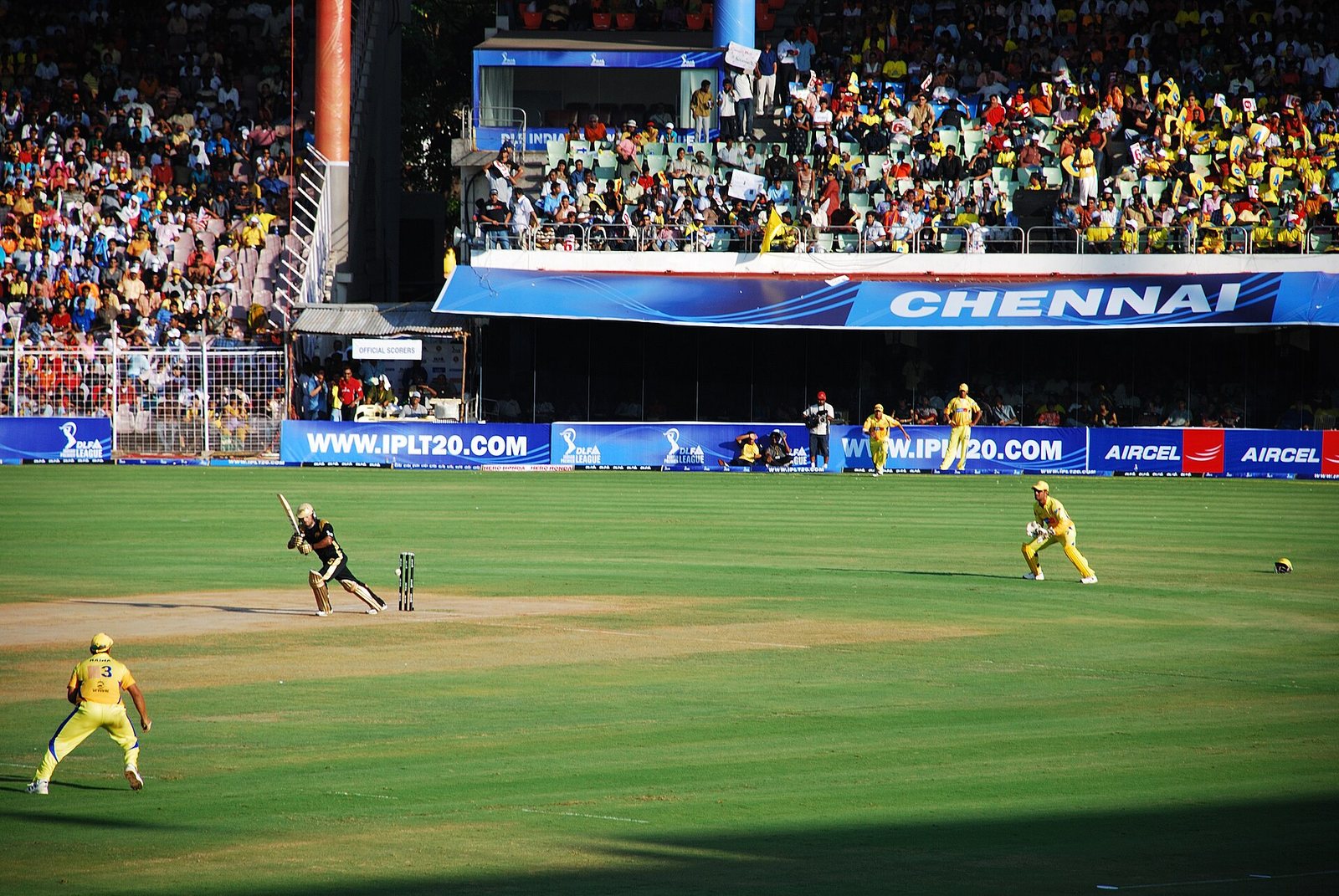
The Indian Premier League has existed since 2008 and plays in the T20 format. It is a franchise league: teams from various Indian cities are owned by private owners and build their squads at an auction. IPL 2026 began on 28 March with a match between Royal Challengers Bengaluru and Sunrisers Hyderabad and finished on 31 May.
The IPL teams list — there are ten of them: Chennai Super Kings, Delhi Capitals, Gujarat Titans, Kolkata Knight Riders, Lucknow Super Giants, Mumbai Indians, Punjab Kings, Rajasthan Royals, Royal Challengers Bengaluru (RCB) and Sunrisers Hyderabad.
The IPL regular season and play-offs
In the regular season each team plays 14 matches, 70 in all. The top four then go through, but the play-offs are not a conventional bracket — they are a ladder with a bonus for a high finish:
- Qualifier 1: the first-placed team against the second. The winner goes straight to the final.
- Eliminator: the third against the fourth. The loser is out.
- Qualifier 2: the loser of Qualifier 1 against the winner of the Eliminator.
- Final.
So the two best teams from the regular season have the right to one mistake, while the third and fourth must win three matches in a row. In 2026 Qualifier 1 was hosted by Dharamsala, the Eliminator and Qualifier 2 by New Chandigarh, and the final by Ahmedabad.
Who won IPL 2026
On 31 May at the Narendra Modi Stadium in Ahmedabad, Royal Challengers Bengaluru met Gujarat Titans. Gujarat scored 155 runs for the loss of eight wickets, and RCB chased the target in 18 overs — 161/5, a five-wicket victory. Virat Kohli remained unbeaten on 75 off 42 balls, reaching his fifty off 25 balls, and was named player of the match. RCB won a second title in a row and became the third franchise after Chennai Super Kings and Mumbai Indians to defend the title.
IPL champions
Across 19 seasons, Chennai Super Kings and Mumbai Indians have the most titles — five each. Kolkata Knight Riders have three, and RCB two (2025 and 2026). The Indian Premier League has been won once each by Rajasthan Royals (the first season, 2008), Deccan Chargers (2009, a team that no longer exists), Sunrisers Hyderabad and Gujarat Titans.
The IPL auction
Squads are built at an auction: franchises bid for players within a budget, and part of the squad can be retained. Under the regulations for 2025–2027, before a mega auction a club retains up to six players — through direct retention or the Right to Match. The budget for the 2025 auction was 120 crore rupees.
The biggest deal of the auction before the 2026 season (held on 16 December 2025 in Abu Dhabi) was Australian all-rounder Cameron Green. Kolkata Knight Riders bought him for 25.2 crore, making him the most expensive overseas player in the league’s history. The player himself will receive only 18 crore: at ‘mini’ auctions there is a cap for overseas players, and the remainder, 7.2 crore, goes to the BCCI’s player fund. The record for Indians without international caps was also broken: Chennai paid 14.2 crore each for 20-year-old Prashant Veer and 19-year-old Karthik Sharma.
The Impact Player rule in the IPL
The league’s main tactical feature is the Impact Player rule in the IPL, a tactical substitution during a match. The rule appeared in 2023, having first been trialled in the domestic Indian Syed Mushtaq Ali Trophy. At the toss a team names, in addition to the starting eleven, a list of substitutes and during the match may bring one of them on for any player: before an innings, after an over or after a dismissal. A substituted player cannot return to the game. Only eleven players may still bat, but a substitute bowler is entitled to bowl a full quota of four overs. If the starting line-up includes four overseas players, only an Indian player may come on as the substitute.
The debate over the rule shows no sign of dying down. India captain Rohit Sharma admitted in 2024 that he was not a fan of the substitution: in his words, it holds back the development of all-rounders, because cricket is played by eleven people, not twelve. Nevertheless the league’s council kept it for the 2025–2027 cycle. How it works in practice was shown by that same final: Venkatesh Iyer came on for RCB as an Impact Player and scored 32 runs off 16 balls.
Frequently asked questions about the IPL and cricket formats
What is the IPL?
The Indian Premier League, a professional T20 cricket league. It has been held since 2008, and franchise teams build their squads at an auction.
How many teams are in the IPL?
Ten. Each plays 14 matches in the regular season, and the top four reach the play-offs.
Who won IPL 2026?
Royal Challengers Bengaluru: in the final on 31 May in Ahmedabad they beat Gujarat Titans by five wickets and defended their 2025 title.
How does an ODI differ from a T20?
In the over limit: in an ODI a team has 50 overs, in a T20 20. An ODI lasts about seven and a half hours, a T20 about three.
How long does a Test match in cricket last?
Up to five days of six hours’ play. If no result is reached in that time, a draw is recorded.
When will the 2027 Cricket World Cup take place?
From 2 October to 21 November 2027 in South Africa, Zimbabwe and Namibia, with the final in Johannesburg.