Arsenal are the Premier League champions 2026 for the 2025/26 season, and this title was largely won from corners. Ten years ago, talk of set pieces in top-level football sounded like an excuse: that is how teams play when they lack quality performers. The 2025/26 season in England turned that logic on its head. The title went to a team that scored from corners more often than anyone in Premier League history, and the league as a whole scored more than usual from set pieces. We break down the numbers to see what happened and why this is not a random wave.
Arsenal are Premier League champions 2026 for the first time in 22 years
Mikel Arteta’s team collected 85 points (26 wins, 7 draws, 5 defeats, goals 71:27) and finished seven points ahead of Manchester City. The title was sealed a game before the end, on 19 May: the day before, Arsenal beat Burnley 1-0, while City drew 1-1 with Bournemouth. The trophy was presented to the Londoners on 24 May after a 2-1 win over Crystal Palace on the final matchday.
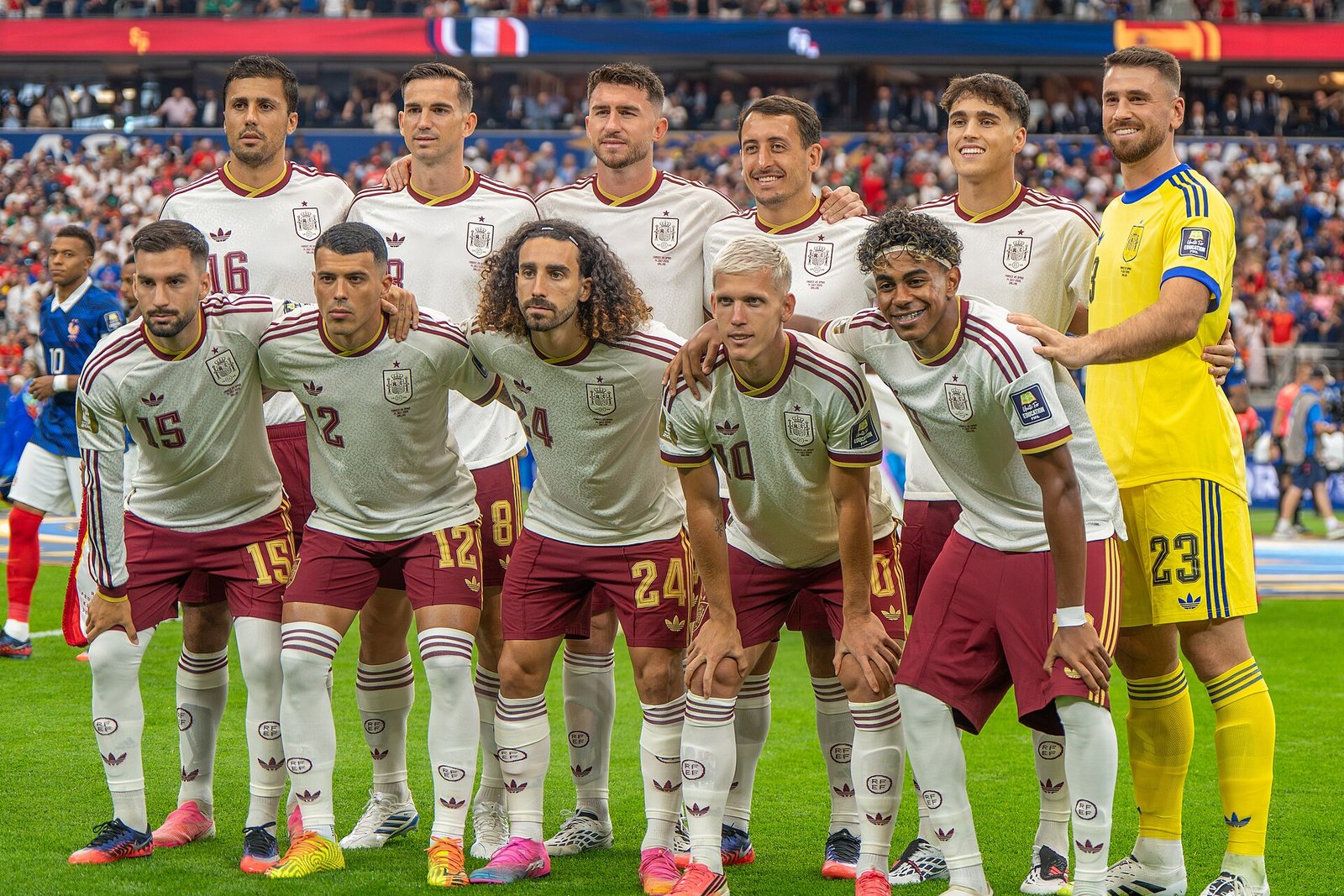
For the club, this is the 14th championship title in the history of the English top flight and the fourth in the Premier League era. The last time Arsenal were champions of England was in the 2003/04 season, when Patrick Vieira’s ‘Invincibles’ collected 90 points without a single defeat. Arteta took charge of the team on 20 December 2019, having previously worked as Pep Guardiola’s assistant at City. The league’s top scorer was Viktor Gyökeres, and David Raya won the Golden Glove for the third season in a row — 19 clean sheets. Three Arsenal players — Raya, Martín Zubimendi and Mikel Merino — also won the World Cup with Spain in the summer.
Premier League 2025/26 table: final standings
- Arsenal — 85 points;
- Manchester City — 78;
- Manchester United — 71;
- Aston Villa — 65;
- Liverpool — 60;
- Bournemouth — 57.
At the bottom of the English Football League, Tottenham finished 17th with 41 points, while West Ham (39), Burnley (22) and Wolverhampton (20) were relegated. The league’s top goal scorer was Erling Haaland with 27 goals, and the player of the season was Bruno Fernandes.
What is a set piece in football?
Set pieces are the restarts of the ball after the game has stopped: corners, free kicks and indirect free kicks, throw-ins, penalties. In analytics, penalties are usually counted separately, because they are an almost guaranteed shot rather than a pattern. The value of a set piece is that it is the only situation in a match that can be rehearsed in full on the training ground: who stands where, who blocks, where the delivery goes.
Goals from set pieces in the Premier League 25/26: every fourth goal after a stoppage
Over the 2025/26 season, goals from set pieces excluding penalties accounted for 27.4% of all Premier League goals. That is the second-highest figure in the league’s 34 seasons. A year earlier it was 20.6%. Corners alone produced 18% of goals — an absolute record; in the 2024/25 season it was 12.1%.
The rise began immediately. After just five matchdays, set pieces were producing a quarter of all goals, and by mid-season corners, free kicks and throw-ins had accounted for 166 goals out of 587. The average corner conversion rate rose to 0.5 goals per match against 0.35 the season before.
Arsenal’s corners: a Premier League record and the title
Arsenal became Premier League champions 2026 largely thanks to set pieces:
- 25 goals from set pieces excluding penalties and only eight conceded — a difference of +17, the best in the league;
- 19 goals from corners — a new Premier League record. The previous mark of 16 goals was shared by Oldham 1992/93, West Bromwich 2016/17 and Arsenal themselves in 2023/24. The Londoners passed the 17-goal mark in April, when Eberechi Eze scored against Newcastle after a short corner routine;
- the corner goals are spread across the squad: by April, Jurriën Timber had scored three, Gabriel, Mikel Merino and Martín Zubimendi two each, and two more goals were turned into their own net by opponents.
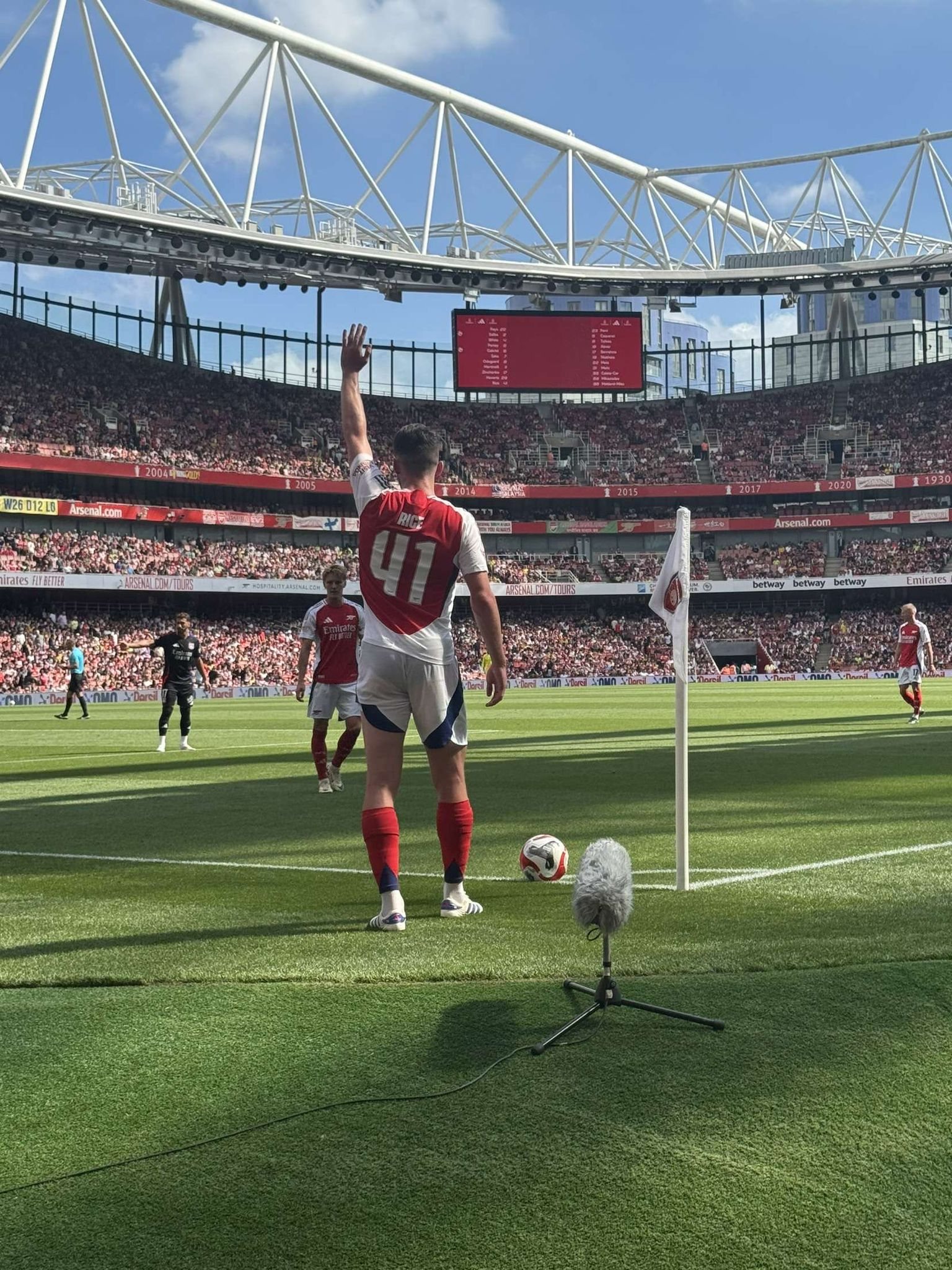
Almost all of them were delivered by one man. Declan Rice took 95 corners over the season (87 of them from the left flank), 130 indirect free kicks and 24 throw-ins into the box. When a team has a deliverer with such consistent service, routines rehearsed on the training ground stop being a lottery.
Set-piece coach Arsenal: Nicolas Jover
The routines with which Arsenal became Premier League champions 2026 are the work of Nicolas Jover, Arsenal’s set-piece coach since 5 July 2021. The Frenchman began as a video analyst at Montpellier, was responsible for set pieces at Brentford from 2016 to 2019, then spent two seasons at Manchester City under Guardiola, where he met Arteta.
Not only Arsenal
The most telling thing is that set pieces also worked for teams without big ambitions. Tottenham had a torrid season and finished one place above the relegation zone, yet in terms of the difference between goals from set pieces scored and conceded (+10) they were second only to Arsenal. At the other end of the scale are Crystal Palace with the league’s worst figure (−9). Bournemouth, Palace and Liverpool each conceded 20 goals from set pieces, more than anyone else.
Bruno Fernandes provided 11 assists from set pieces and equalled the Premier League single-season record held by Steven Gerrard. Virgil van Dijk scored four times by being the first to touch the ball after a corner delivery — the best figure in the league.
The anatomy of the modern corner
Inswinging delivery
The ‘away from goal’ delivery has become a rarity in the Premier League. Over the season there were 2,643 inswinging crosses towards goal in the league and only 541 away from goal. Bournemouth’s share of inswinging deliveries was 96.4%, the highest in the league. The most balanced approach belongs to Leeds, whose such deliveries made up only 52%. The logic is simple: a ball travelling towards goal forces the goalkeeper to make a decision under pressure, and any touch in the crowd can end in a goal.
The short corner is fading
At the same time, teams are abandoning short corners. By mid-season their share was 11.3% against 18% a year earlier. If a delivery into the box produces a goal more often than before, there is less sense in spending a corner on a passing exchange by the flag.
Direct free kicks have almost died out
The flip side of the same trend is shots from free kicks. In 2025/26 there were 251 over the season, whereas in 2003/04 there were 621. Dominik Szoboszlai tried the most: 14 attempts and four goals. Teams increasingly prefer a cross to pre-positioned players over a shot into the wall.
The throw-in as a corner: long throws
The most noticeable shift is long throws. In the 2024/25 season, the Premier League averaged 1.52 long throw-ins into the box per match, while the previous record was 1.67 (the 2018/19 season). By mid-2025/26 the figure had risen to 3.97. After 210 matches, long throws had produced 18 goals — one every 11.7 games, whereas a year earlier a goal from such a throw-in came once every 27 matches.
The chief exponent is Brentford: by January they had taken 100 long throw-ins into the box, 94 of them by one man, Michael Kayode. For such teams, a throw-in in the final third becomes another corner, with the difference that when the ball is received directly from a throw-in, under the rules of the game, there is no offside.
Why this is happening
There are no direct statistics on the causes, but the numbers paint a coherent picture. The game as a whole has become more direct: already in the first weeks of the season, the average duration of possession in a single attack had fallen to 9.6 seconds against 10.4 a year earlier, and there were fewer high turnovers. In January there were 13.3 per match against 14.6 the previous season. Goalkeepers are also kicking long from goal more often: almost half of goal kicks end in the opposition half, although in 2024/25 it was a little over 40%.
When open play becomes less predictable and pressing no longer guarantees chances, a set piece remains the only situation that can be rehearsed down to the smallest detail. Clubs have understood this and are investing in set-piece coaches and in deliverers with accurate service. In Europe, this approach was not enough for Arsenal to win a trophy: the Londoners lost the Champions League final to PSG on penalties. The 2026/27 season will show whether defending teams learn to respond as quickly as attacking teams have learned to score.
Frequently asked questions about Arsenal and set pieces in the Premier League
Who won the Premier League 2025/26?
Mikel Arteta’s Arsenal. The Londoners became Premier League champions 2026 with 85 points, seven more than Manchester City. The title was sealed on 19 May 2026, a game before the end of the season.
How many times have Arsenal been champions of England?
14 times, four of them in the Premier League era. Before 2025/26, the club’s last title came in the 2003/04 season.
How many corners has Arsenal scored from in the 2025/26 season?
19 — a Premier League record. The previous achievement of 16 goals was shared by Oldham, West Bromwich and Arsenal themselves in the 2023/24 season.
What is a set piece in football?
Restarts of the ball after the game has stopped: corners, free kicks, throw-ins and penalties. In the 2025/26 season, set pieces excluding penalties produced 27.4% of Premier League goals.
What does a set piece coach do?
He designs and rehearses restarts — corners, free kicks and throw-ins — on the training ground. Arsenal’s set-piece coach is the Frenchman Nicolas Jover, at the club since July 2021 and previously at Brentford and Manchester City.
When did Arteta take charge of Arsenal?
20 December 2019. The 2025/26 Premier League title was his first championship as head coach; before that, he won the 2020 FA Cup with Arsenal.